

Locally Sourced Lumber and Wood Products for Building and Design
Jefferson Timber Cooperative sells high-quality lumber and finished wood products sourced from local forests and produced through a cooperative network of local businesses while building a more sustainable wood economy from forest to finished product.
Our work starts with locally grown, native trees from sustainably managed, permanently protected forests. Our member businesses then process, mill, and transform trees into high-quality building materials for a range of projects.
Local Lumber, Healthy Lumber, Thriving Communities
When you purchase lumber and wood products from JTC, you're supporting local forests, sawyers, woodworkers, and timber businesses across the Olympic Peninsula. Explore posts, beams, flooring, siding, slabs, and specialty wood products sourced and processed locally.
View our Featured Product
Chimacum Community Forest Harvest
We're now processing FSC-certified Douglas fir and western red cedar from the Jefferson Land Trust Chimacum Community Forest in Chimacum, WA.

Rough Sawn Lumber
Locally sourced lumber sourced locally and processed to your projects specifications by JTC member businesses.

Custom Lumber Products
Value-added products crafted by JTC member businesses and customized to your projects specifications.
Building A Local Wood Ecnomy
JTC was built to create a positive impact for our forests, our local economy, and our communities.
Environmental Impact
We prioritize wood from diverse, responsibly managed forests that support long-term forest health. Through restoration, salvage, and forest health projects, we help reduce waste and protect working forests for future generations.
Economic Impact
JTC was created to strengthen the local wood economy on the Olympic Peninsula. By supporting local businesses and investing in long-term solutions, we're helping create jobs and opportunities for future generations.
Social Impact
By connecting every step from forest to finished product, JTC keeps more value within our region. We support local jobs, strengthen rural businesses, and help keep more value rooted in our communities.

Port of Port Townsend and JTC work together to support and strengthen the local wood economy
By Scott Wilson
March, 2026
JTC continues to welcome new member businesses, expanding the cooperative's network and creating new opportunities for collaboration across the Olympic Peninsula.
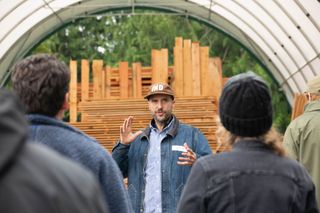
Community forest partnerships
These partnerships help connect thoughtfully managed forests with local processing and long-term stewardship.

Building the yard
JTC signed a long-term lease on 12.2 acres with the Port of Port Townsend and is developing the site into a local wood processing center and showroom. This space is open to the public and will become a hub for collaboration, processing, innovation, and connection.

Building a shared infrastructure
By investing in shared equipment and infrastructure, we're helping small wood businesses grow stronger together.
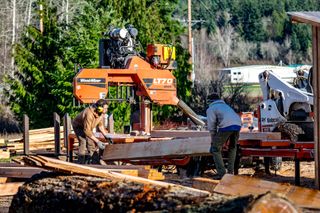
Closing the loop
We're working toward a system where wood waste becomes an opportunity. Through upcycling and innovative use of byproducts, JTC is helping create a more circular, low-waste local wood economy.

Frequently Asked Questions
Does wood from JTC cost more than other sources?
The Timber Co-op does not try to compete on price with mass-produced, mass-
marketed commodities like standard framing lumber. Instead, we focus on species and
products that we can sell at a competitive price—often items that the big mills and
retailers don’t offer. If JTC costs a little more in some cases, the price reflects the value
you receive from buying wood with a story—a superior quality product that supports
local jobs and sustainable forestry.
Where does JTC source wood?
JTC sources its logs from the Olympic Peninsula and Kitsap Peninsula. Part of our
founding mission was to break with our region’s legacy of exporting raw logs for
processing—often to east Asia—and instead use those logs to support local jobs and
communities.
How does buying wood from JTC help the environment?
JTC is committed to buying logs from member businesses and other growers that
practice triple-bottom-line forestry—maximizing ecological, social, and economic
impacts. Instead of planting monocultures that get clearcut every 35 years, these forest
managers selectively harvest trees from older stands with high biodiversity.
Specifically, JTC’s policy is to source timber:
1. Grown in forests that are certified by the Forestry Stewardship Council or
managed to equivalent standards;
2. Salvaged from blowdowns, fires, hazard trees, post-industrial material, or land-
clearing operations in designated residential zones; or
3. Harvested during thinning or other forest-health operations.
How can a business become a member?
The Timber Co-op is always looking for hard-working, creative entrepreneurs who want
to help build something bigger as they build their individual businesses. Our culture is
built on trust and transparency, anchored in a shared commitment to making our
communities and forests better.
The Co-op has a Membership Application and Membership Agreement that involves a
candidacy period and a member equity buy-in. For more information, contact our
Executive Director, Cody Wayland, at cody@jeffersontimbercoop.com.
What are some other ways I can get involved?
So glad you asked! Let us count the ways:
- Think of JTC when you plan your next project—buy beautiful wood from us and help make local wood as big as local food;
- Stop by the Yard, at 6432 Highway 20, just south of Jefferson County Airport, to meet our people and look at what we’ve got in stock;
- Contact JTC if you or friends or family own some trees that need to be harvested and that you’d love to see processed locally;
- Follow JTC’s progress on our website, social media, and traditional media;
- Spread the word—tell friends and family about JTC and the local wood movement;
- Consider investing money in JTC by becoming a preferred shareholder and receiving annual dividends.
- Think of JTC when you plan your next project—buy beautiful wood from us and help make local wood as big as local food;
What is a "circular wood economy"?
The term “circular economy” refers to breaking the traditional “take-make-waste” pattern of linear resource use and replacing it with innovative industrial systems that make long-lived products and reduce or eliminate waste. For JTC, building a circular wood economy means sourcing logs from ecologically diverse, sustainably managed forests, carefully maximizing the value of every log, minimizing fossil fuel use in transportation, and upcycling all by-products.
Why did JTC become a co-op?
The sawyer-entrepreneurs who started the Co-op wanted to do four things:
- brand and market local, sustainably sourced wood;
- acquire the land security needed to make long-term investments in their businesses;
- get to a scale that would allow them to process by-products and achieve zero waste; and
- access the capital-intensive facilities and equipment needed to expand their product lines.
By banding together as a business cooperative, all of these goals became achievable. With expert support from Luis Sierra of the Northwest Cooperative Development Center, JTC was born in January 2025.
- brand and market local, sustainably sourced wood;